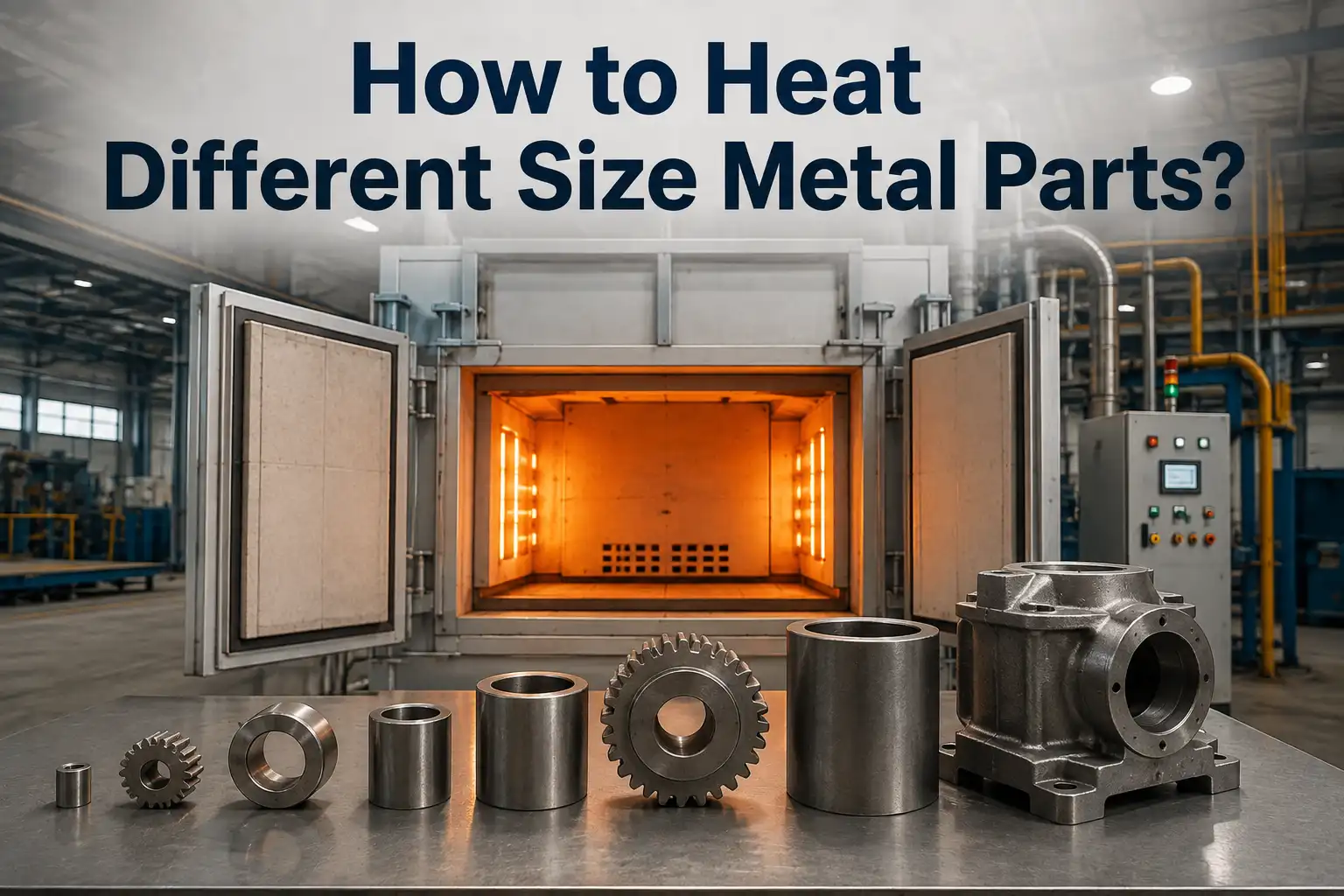
Heating metal parts is not just about setting a temperature. Size matters. Weight matters. Shape matters too.
A thin bracket heats fast. A big steel block heats slow. Its core stays cool long after its surface gets hot. If you ignore this, you get uneven heat. You get longer cycles. You get bad results.
For shops that run many part sizes, a Batch Oven helps a lot. It lets you heat each batch on its own terms.
Why Do Metal Parts Heat at Different Speeds?
Not all metal parts take in heat the same way.
A few things control this:
Material type
Thickness
Weight
Shape
Starting heat
Target heat
Airflow
A thin sheet has low mass. It heats up fast. A thick block has more mass. Its core stays cold, even after its skin turns hot.
This leads to one key rule: oven heat is not part heat. The air inside the oven can hit your target fast. But that doesn't mean the whole part has reached that heat yet. For most jobs, the goal is to heat the full part — not just the air around it.
How to Heat Different Size Metal Parts
The right method depends on the part. A good approach is to sort parts into three groups: small, medium, and large.
Small and Thin Parts
Small brackets, sheets, and plates have low mass. They heat fast.
Good methods for these parts:
Cabinet ovens
Small batch ovens
Induction heating
Since these parts heat fast, watch them closely. It's easy to overheat a thin part by mistake.
Medium-Sized Parts
Housings, brackets, and machine parts often fall in this group. These need more care than small parts.
A forced-air oven works well here. It moves hot air around the part. This gives more even heat than still air.
Large and Heavy Parts
Big steel frames and thick blocks need the most time. Heat must travel deep into the part, not just sit on the surface.
Good options for these parts:
Large batch ovens
Walk-in ovens
Custom ovens
Heat-treat furnaces
Never use one fixed time for all large parts. The right cycle depends on the material and the thickness.
What Controls How Fast a Part Heats?
Before you pick an oven, learn what drives heat-up speed.
Material. Steel, aluminum, and copper all take in heat at different rates. Your process should match your metal.
Thickness. This is the biggest factor. A thin sheet heats fast. A thick block heats slow at its core. Don't just measure length and width. Always note the thickest point too.
Weight. A heavy part holds more mass. More mass needs more heat energy. Two parts can look the same size but need very different heat times if their weight differs.
Shape. Odd shapes make heating harder. Thick spots, thin spots, corners, and hollow areas all heat at their own pace.
Starting heat. A cold part needs more time than a part that's already warm.
Target heat. Going from room heat to 100°C is quick. Going to 400°C takes far longer. Know your target before you pick an oven.
Heating Mixed Part Sizes in One Shop
Many shops run small, medium, and large parts on the same floor. Trying to heat them all the same way rarely works well.
A better plan is to split them into batches:
Batch one holds small parts. Give them a short cycle.
Batch two holds medium parts. Give them a cycle built around their mass.
Batch three holds large parts. Give them extra time to heat all the way through.
This is why batch ovens work so well for shops with mixed part sizes.
Why a Batch Oven Suits Mixed Metal Parts
A batch oven heats parts in groups, not on one long line. This means you can change your settings between each group.
For example:
Small parts get a short, quick cycle. Medium parts get a longer cycle with steady airflow. Large parts get the longest cycle, with slow, even heat.
This gives you real flexibility when your part range shifts often.
A batch oven can also use shelves, trays, racks, carts, or walk-in space. The right load style depends on your part size and weight.
How to Get Even Heat on Mixed Parts
Even heat takes more than just the right oven temperature. Follow these steps:
Keep good airflow. Hot air must move around every part. Plan your airflow around your chamber size and your load.
Don't overload the oven. Too many parts block airflow. This creates hot spots and cold spots. Just because parts fit doesn't mean you should load that many.
Leave space between parts. Air needs room to move around each item.
Don't block air paths. Big parts should never sit in front of air vents or fans.
Use good racks. The right rack holds parts in place. This makes each batch repeat the last one.
Oven Heat vs. Real Part Heat
This idea matters a lot in metal heating.
Say your oven is set to 200°C. That does not mean your part is at 200°C right away. A heavy part may look hot on the outside. Its core can still be much cooler.
For tough jobs, check the real part heat, not just the oven's air heat. A full heat cycle often looks like this: heat up, reach target, hold at that heat, then cool down. The right cycle depends on your material and your job.
How Long Does It Take to Heat Metal Parts?
There's no single answer here. Heat time depends on:
Material
Thickness
Weight
Starting heat
Target heat
Shape
Oven heat
Airflow speed
A thin aluminum sheet and a thick steel block will never hit the same heat at the same time, even in the same oven. For heat-treat work, always follow the exact spec for your material. Don't guess based on a rule of thumb.
Can One Oven Handle All Part Sizes?
Yes, a well-built oven can heat many part sizes. But you must design it around your biggest, toughest job — not your average one.
Key things to check:
Max part size
Max batch weight
Target heat
Heat-up speed
Heat evenness
Airflow
Load method
Batches per day
Sometimes parts differ so much that you still need separate batches, even in the same oven.
Batch Oven or Induction Heater?
These two tools solve different problems.
A batch oven heats the whole part, evenly, inside a closed space. It's a strong fit for full-part heating, drying, curing, and batch work. It also adapts well when your batch size or cycle needs to change.
An induction heater works by electromagnetic force. It shines at fast, local heating — like heating just one small spot on a part. It's less suited to heating an entire large part evenly.
Pick a batch oven when you need full, even, controlled heat. Pick induction heating when you need fast, local heat on a small area.
Batch Oven or Continuous Oven?
This choice depends on your part mix and your output level.
A batch oven fits shops with many part sizes and shifting needs. You can change cycles between batches with ease. It suits small and medium output well.
A continuous oven fits high-volume work, where the same part runs again and again on a belt. It's less flexible for cycle changes. But it beats a batch oven on raw output when your line never changes.
The short version: mixed parts and lower output favor a batch oven. Same part, high output, favors a continuous oven.
What Batch Oven Fits Your Metal Parts?
The right build depends on your part size and weight.
Cabinet batch oven. Fits small parts and tight floor space.
Shelf or tray batch oven. Fits parts that load well on racks or trays.
Walk-in batch oven. Fits large or heavy parts that need carts or direct walk-in space.
Custom batch oven. Fits parts with odd size, odd shape, or special heat needs.
When Do You Need a Custom Batch Oven?
A stock oven works fine for simple jobs. But you may need a custom build if you have:
Very large parts
Heavy batch loads
Many part sizes in one run
Odd part shapes
Fast heat-up needs
Strict heat-evenness rules
Tight floor space
High batch counts
A custom oven is built around your part, your weight, your material, your heat, your batch size, your cycle time, and your load method. You don't force your work to fit a stock box.
What to Tell an Oven Maker
Before you request a quote, gather this list:
About your part: material, length, width, height, max thickness, weight, and shape.
About your process: target heat, starting heat, heat-up speed, hold time, total cycle time, and cooling needs.
About your output: batch size, batches per day, and your load and unload method.
About the oven: chamber size, heat method, airflow type, control needs, power type, and floor space.
The clearer this list is, the better your oven will fit your real job.
How a Batch Oven Helps With Mixed Part Sizes
A batch oven brings order to a job that would otherwise rely on guesswork. It gives you:
Steady, controlled heat
Flexible batch sizes
Cycles you can adjust for each group
Even airflow
Repeat results, batch after batch
Load options that fit your part range
Custom builds for odd or large parts
Instead of forcing every part through the same fixed cycle, you can build each batch around its real need.
Common Questions
How do you heat different size metal parts? Match the method to the part. Look at material, thickness, weight, shape, and target heat. Small parts heat fast. Big, thick parts need slow, controlled heat to warm all the way through.
Do thicker parts take longer to heat? Yes, in most cases. Heat must travel from the surface to the core, and that takes time. The exact time still depends on material, shape, and your oven setup.
What's the best oven for large metal parts? A walk-in oven or a custom batch oven usually works best. The right pick depends on your part size, weight, target heat, and load method.
Can one batch oven heat many part sizes? Yes. Split your parts into batches by size, then run each batch with its own cycle.
How do you stop uneven heating? Use good airflow, avoid overloading, leave space between parts, and check real part heat for tough jobs.
Batch oven or induction heater — which is better? It depends on your job. A batch oven suits full-part heating and batch work. Induction heating suits fast, local heat on a small spot.
Can one oven handle both small and large parts? Yes, if the chamber, airflow, and controls are built for that range. Very different parts may still need their own batch, even in the same oven.
Final Thoughts
Heating different size metal parts takes more than a high-temperature oven. It takes a process built around the real part in front of you.
Small, thin parts heat fast. Large, heavy parts need slow, steady heat to warm all the way through. Material, thickness, weight, shape, airflow, and load all shape the result.
For shops with mixed part sizes, a batch oven gives you the flexibility to group parts and run the right cycle for each group. Small parts suit a cabinet or shelf oven. Large parts suit a walk-in or custom oven.
The best heating setup isn't the one with the highest number on the dial. It's the one that brings your real part, all the way through, to the exact heat your job needs.
Comments
Join the discussionNo comments yet. Be the first to comment.